Kitchen Ceiling Plaster Repair in Grosse Pointe Woods
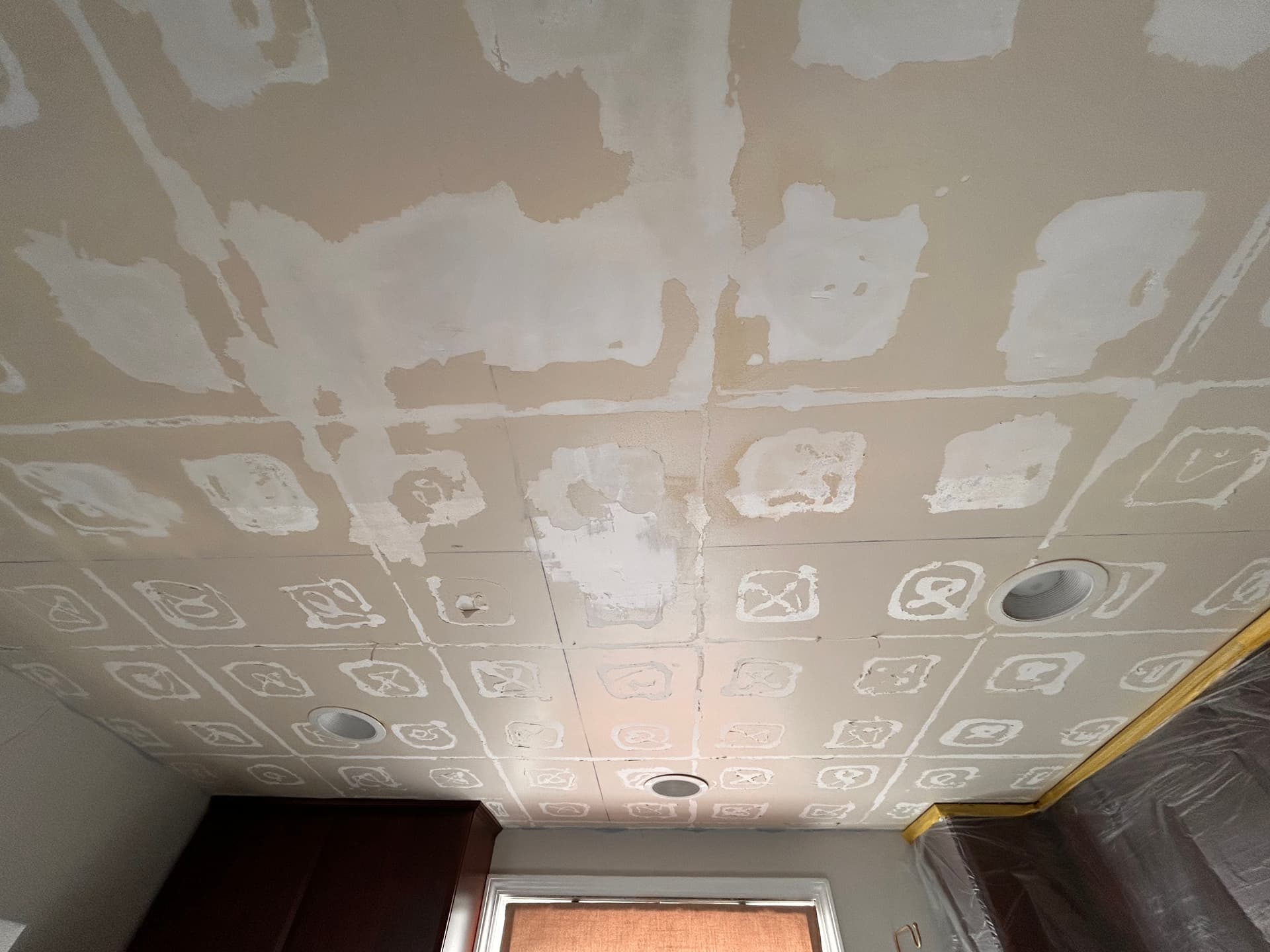
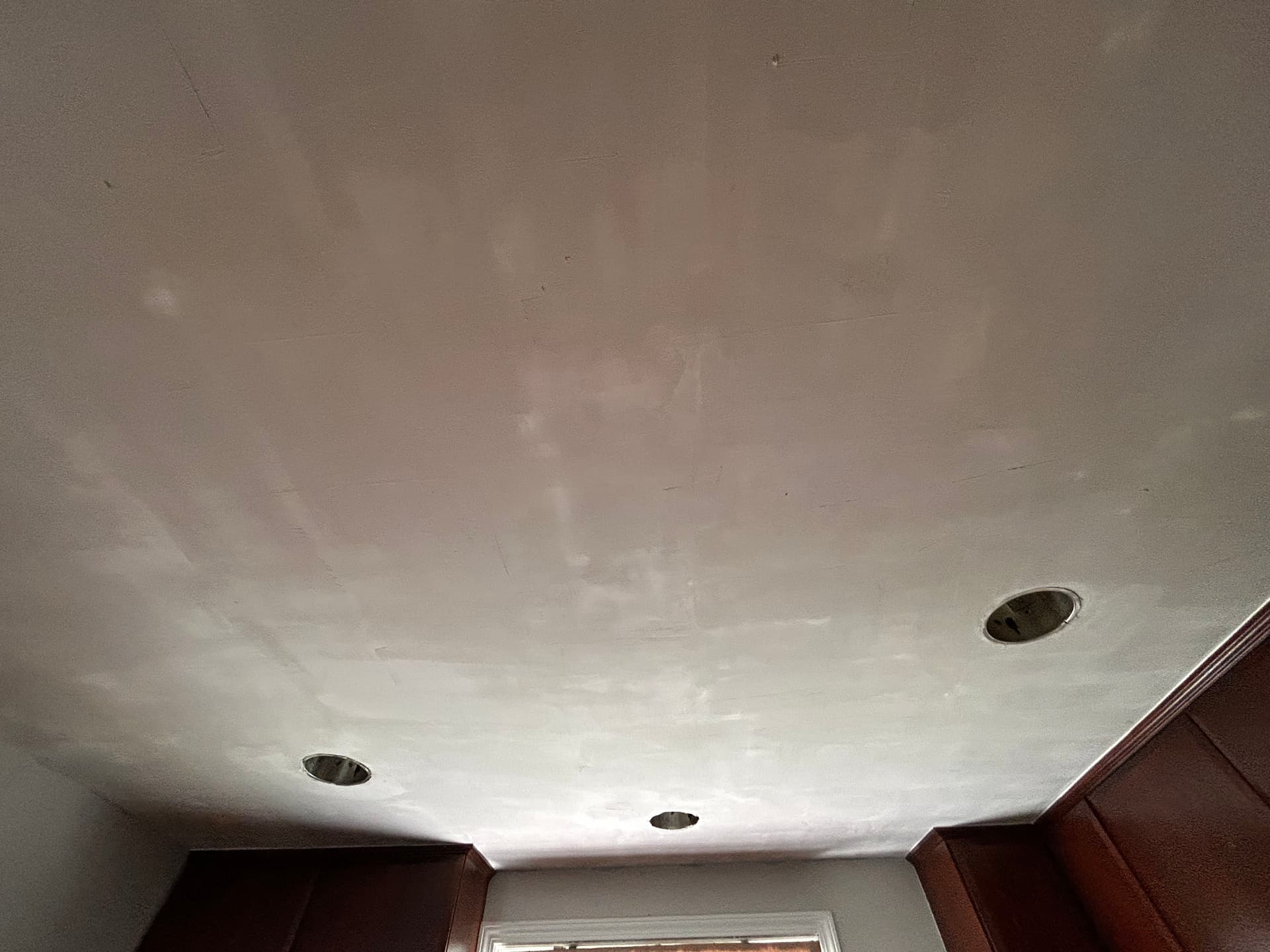
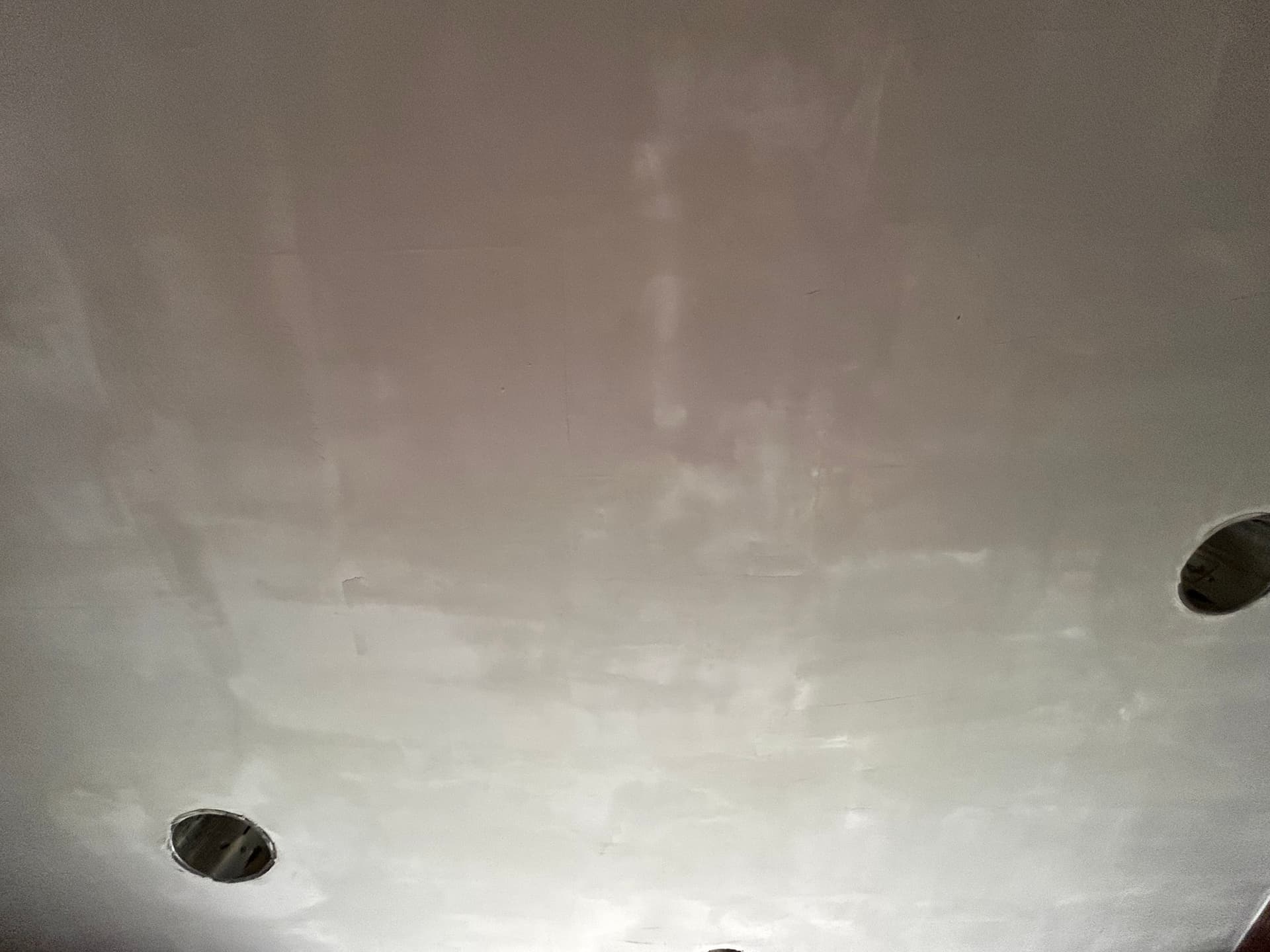
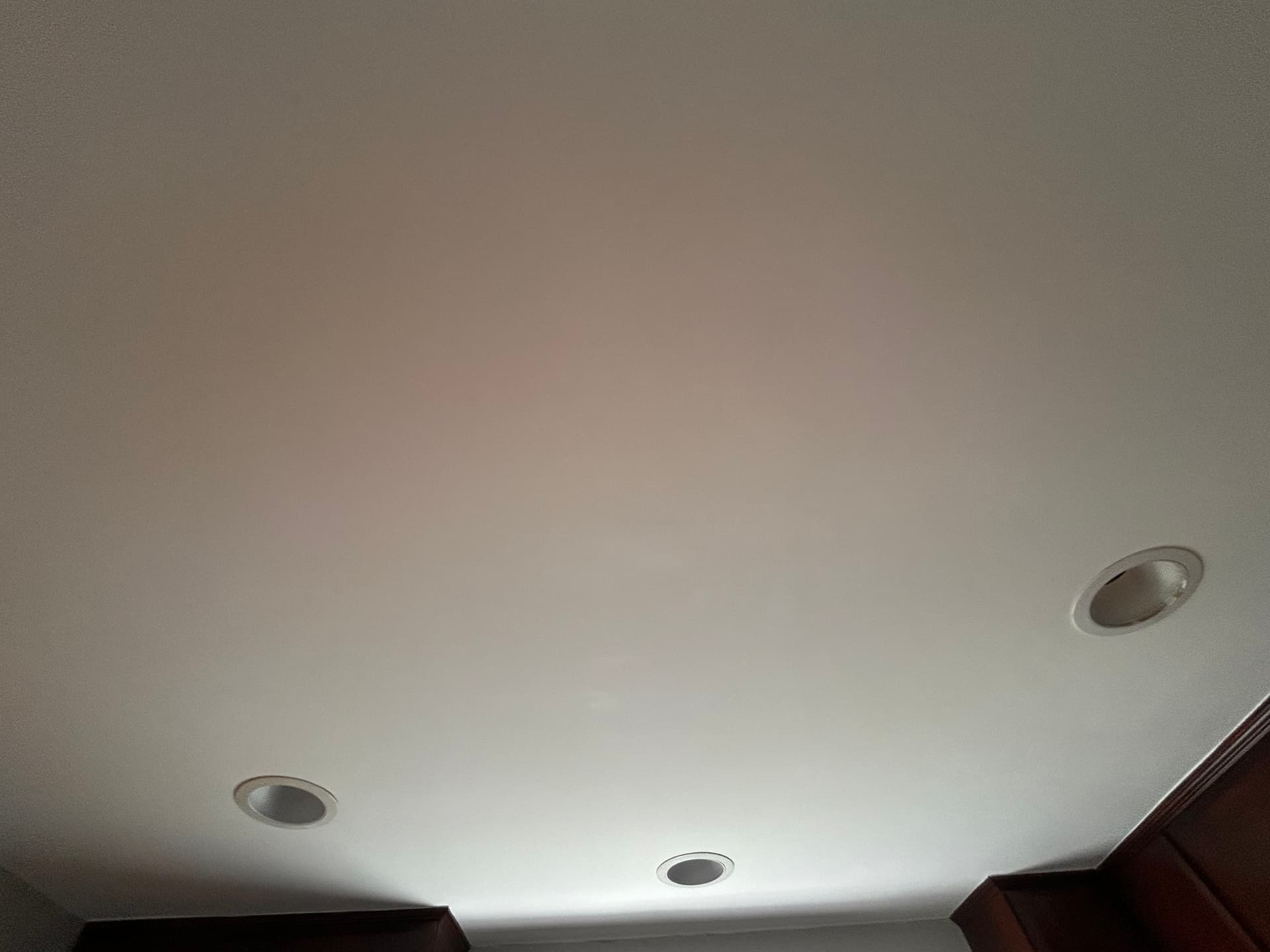
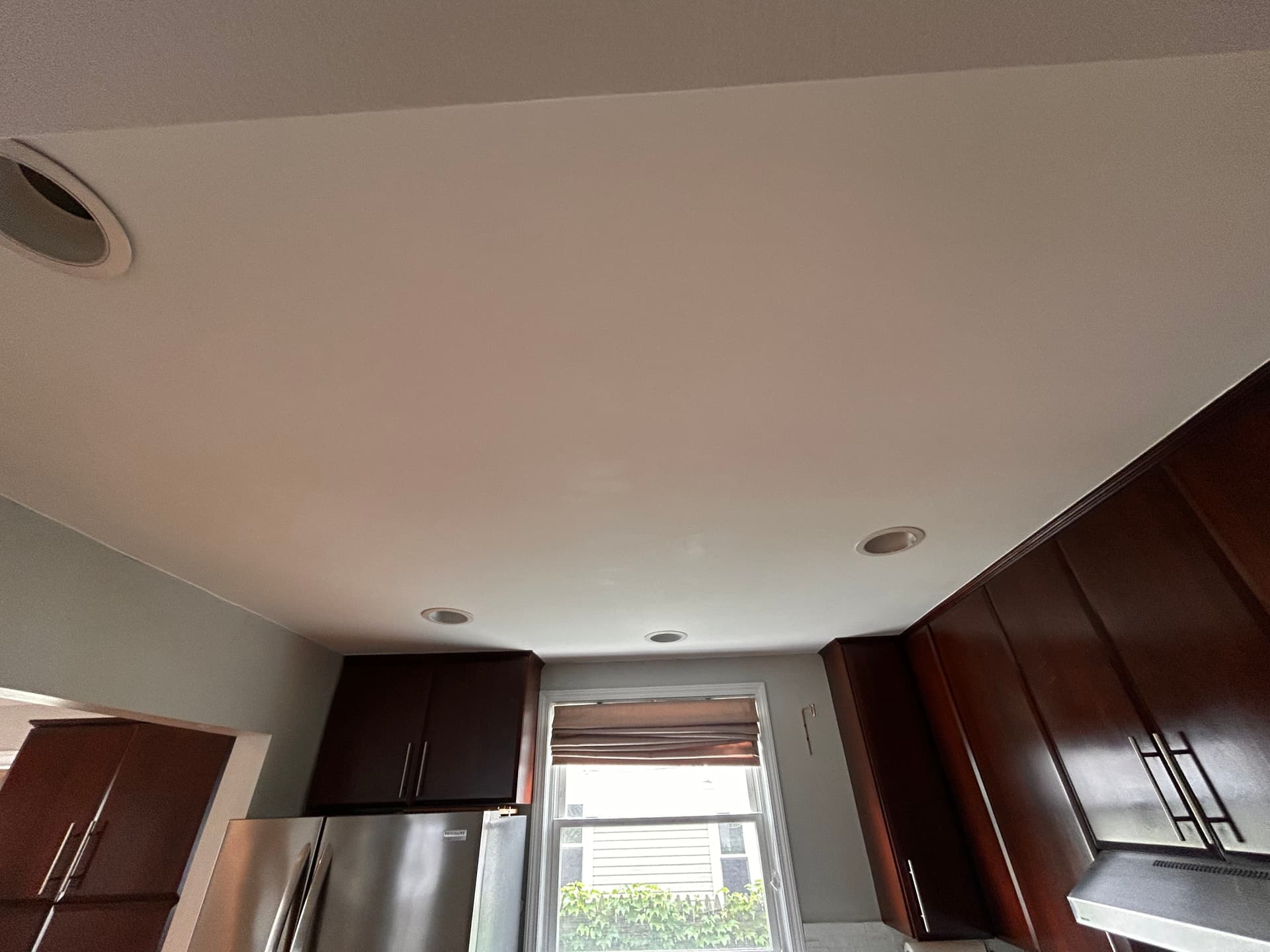
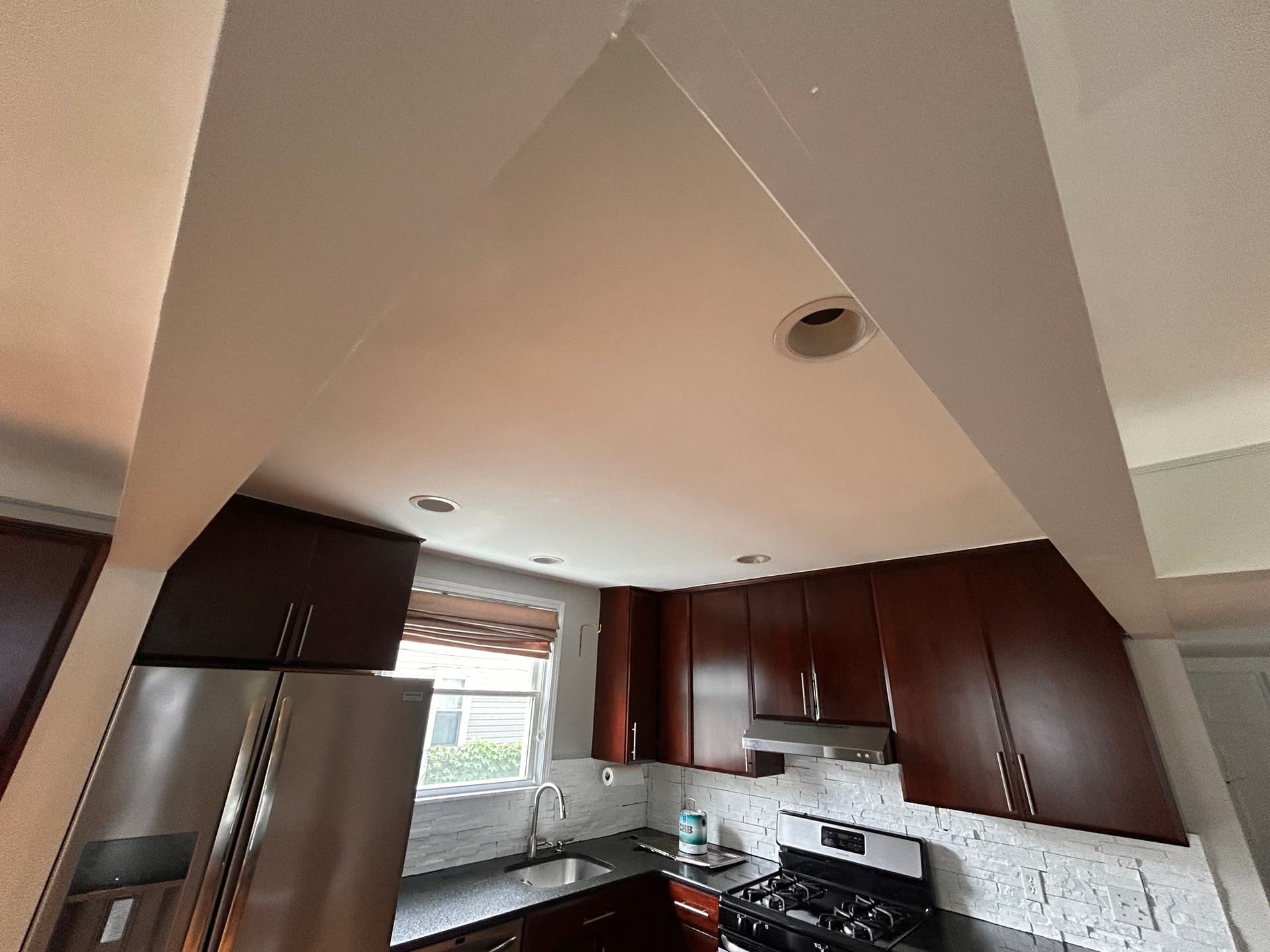
Kitchen ceilings take a beating over time. Heat, humidity, and just the natural settling of a home can leave you with cracks, soft spots, and patchy surfaces that are impossible to ignore once you start noticing them. That's exactly what this homeowner in Grosse Pointe Woods was dealing with - a ceiling that had seen better days and needed serious attention before any paint could go on.
Here's what we were working with: old ceiling tile had been removed and the surface left behind was rough, uneven, and full of cracks running in multiple directions. There were gaps, low spots, and areas where previous patch attempts had been made but never properly finished. It wasn't just cosmetic - a ceiling like that will eat paint and still look bad if you skip the repair work.
We got into it layer by layer. The process on a job like this involves filling, skimming, and building the surface back up so it's flat and consistent. That takes more than one pass. You have to let each coat dry, sand it back, and check your work under different lighting to catch anything that might ghost through once paint goes on. No shortcuts.
What you end up with is a ceiling that looks like it was never touched. Smooth, solid, and ready for paint. The homeowner can now go straight to their painter without worrying about cracks telegraphing through or patches showing up under a fresh coat. That's the whole point - doing the plaster repair right so the finished product actually holds up.
This kind of work is what we do. Whether it's a kitchen ceiling, a living room wall, or anything in between - plaster and drywall repairs done properly make everything that comes after them easier. If you've got a ceiling or wall that needs attention before your next paint job, this is exactly the kind of work we handle.